JR East publishes.
Line status for the Kanto network, straight from JR East's train information.
SHINDO is not affiliated with or endorsed by East Japan Railway Company.In Japan the trains stop automatically when the ground moves, and the station crowds begin minutes later. SHINDO puts 42 JR East lines and 16 Tokyo subway lines on one calm screen, tells you only about the lines you actually ride, and after strong shaking sends a single summary of the rail around you — even when nothing is affected. No refreshing three operator websites in the middle of a crowd.
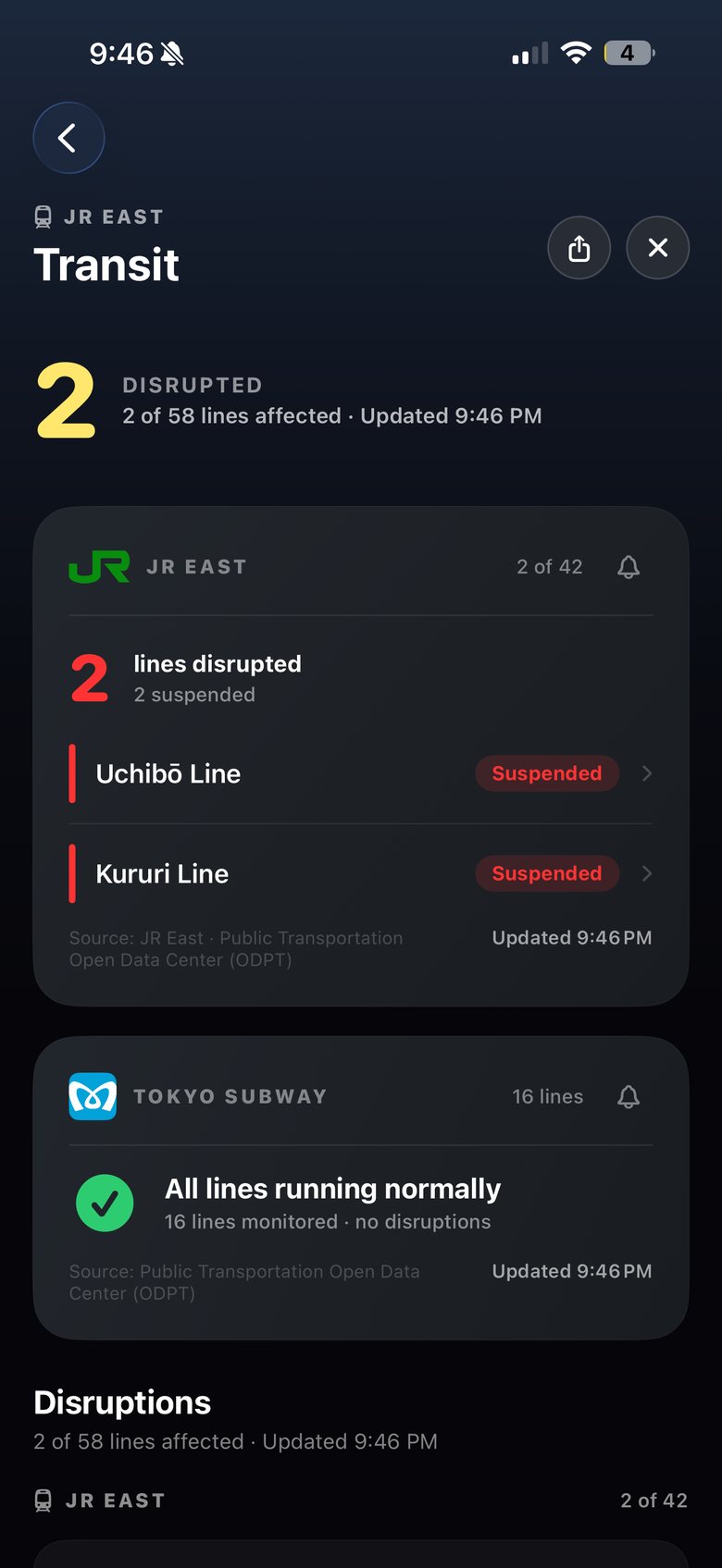
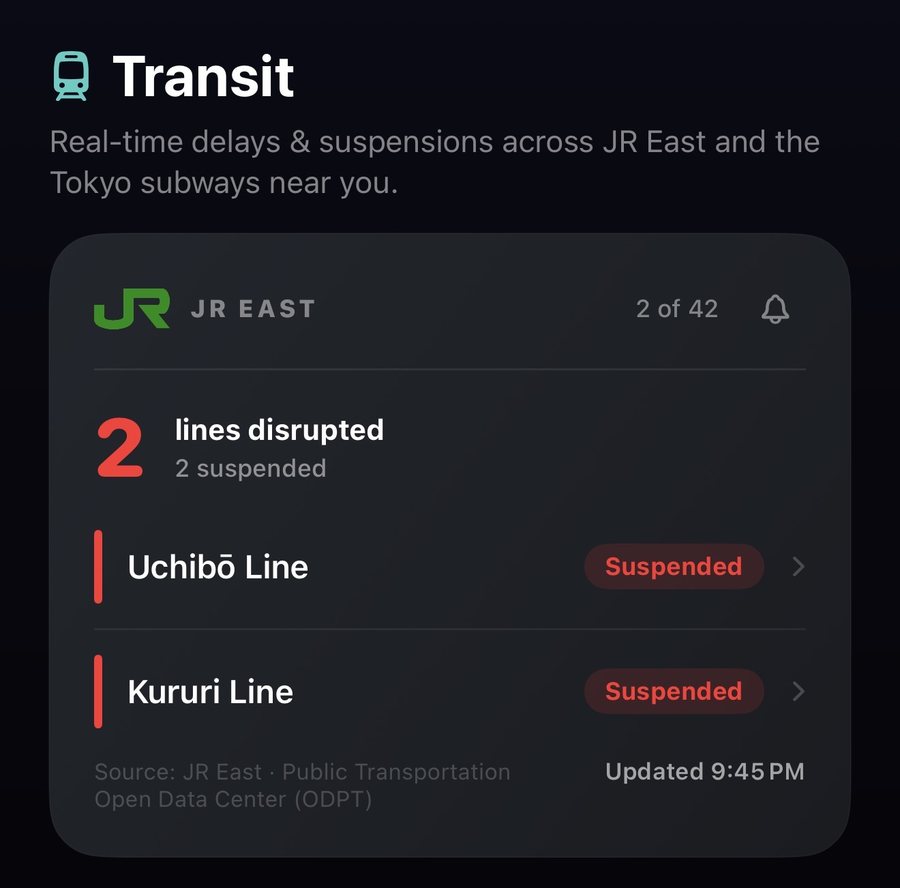
2 of 58 lines affected.
Uchibō Line · suspended.
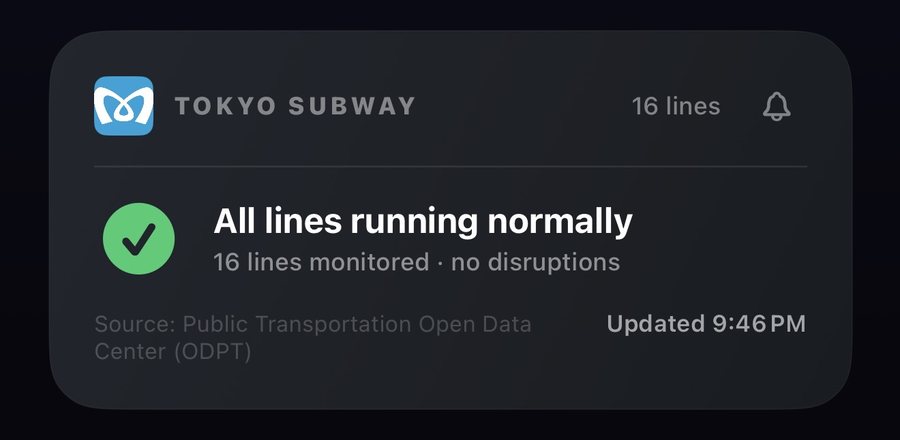
Tokyo subway: all normal.
Line status as published by the operators. Always check station announcements and the operator before you travel.
Four stops, every few minutes. Scroll and watch a status update make the trip.
Line status for the Kanto network, straight from JR East's train information.
SHINDO is not affiliated with or endorsed by East Japan Railway Company.Tokyo Metro, Toei and other operators share their status through the Public Transportation Open Data Center.
Our server in Tokyo checks every few minutes, gives each line its English name and cause label, and spots what changed.
Full translation of every notice is rolling out.One alert per disruption on the lines you starred — never a stream of updates about lines you don't ride.
JR East and the Tokyo subway side by side: how many lines are disrupted, which ones, and when the status was last updated.
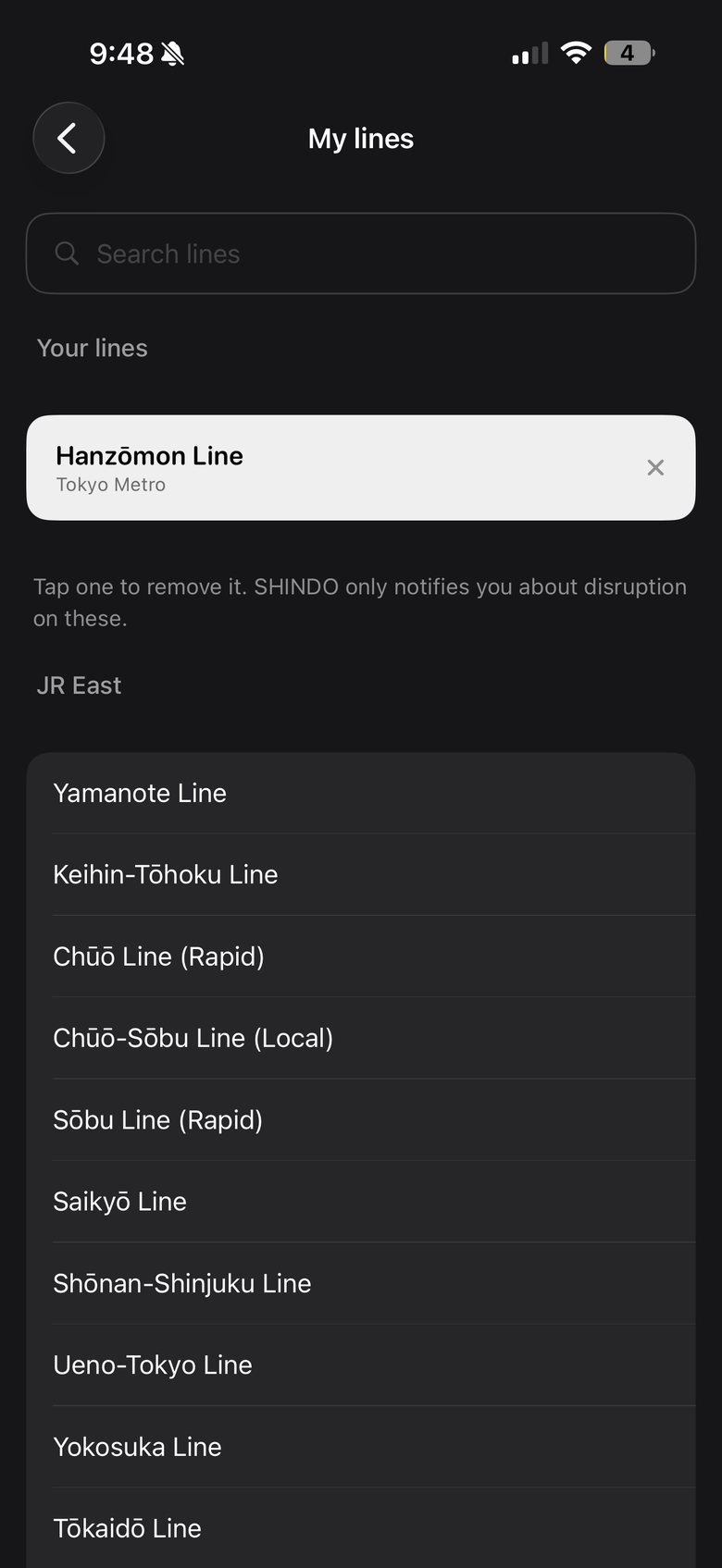
Search and star your commute — the Hanzōmon Line, the Yamanote, whatever gets you home. SHINDO only notifies you about those.
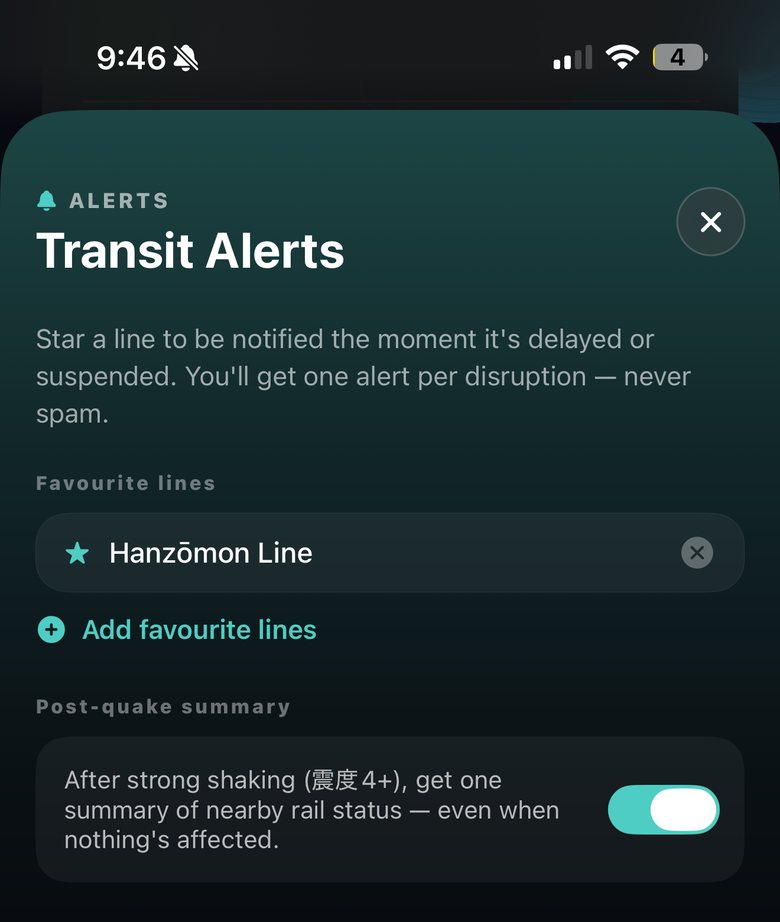
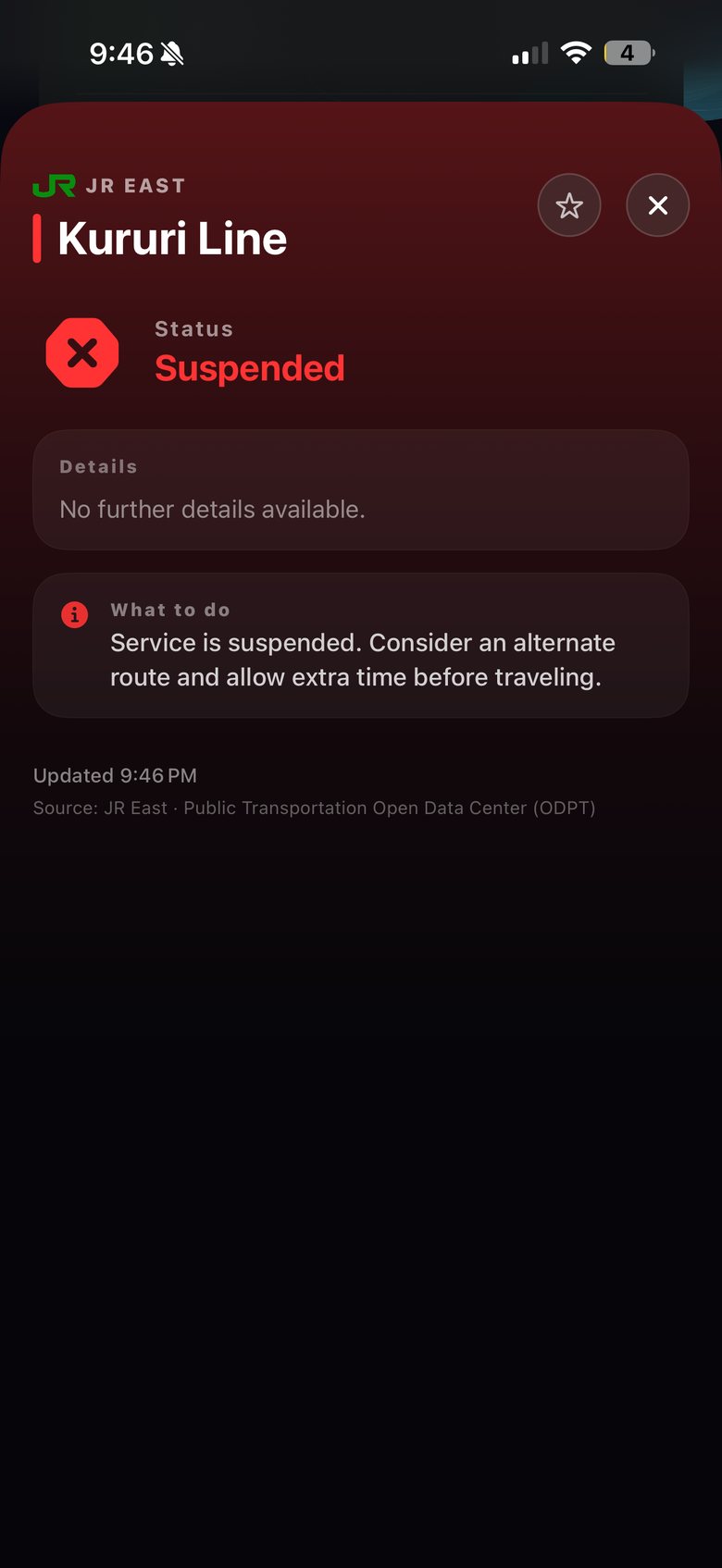
The moment a starred line is delayed or suspended you get a single alert, and every line opens to its status, the details and what to do.
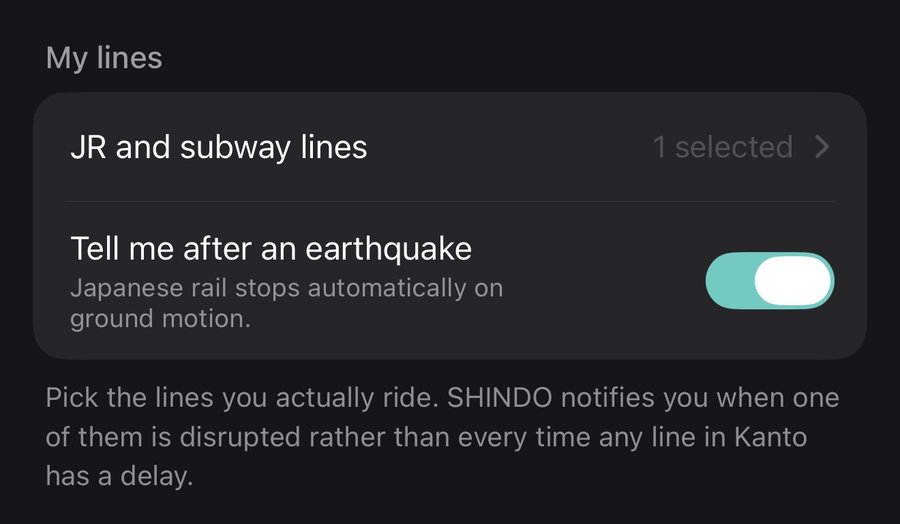
After strong shaking (震度 4+), SHINDO sends one summary of nearby rail status — even when nothing is affected — because Japanese rail stops automatically on ground motion.
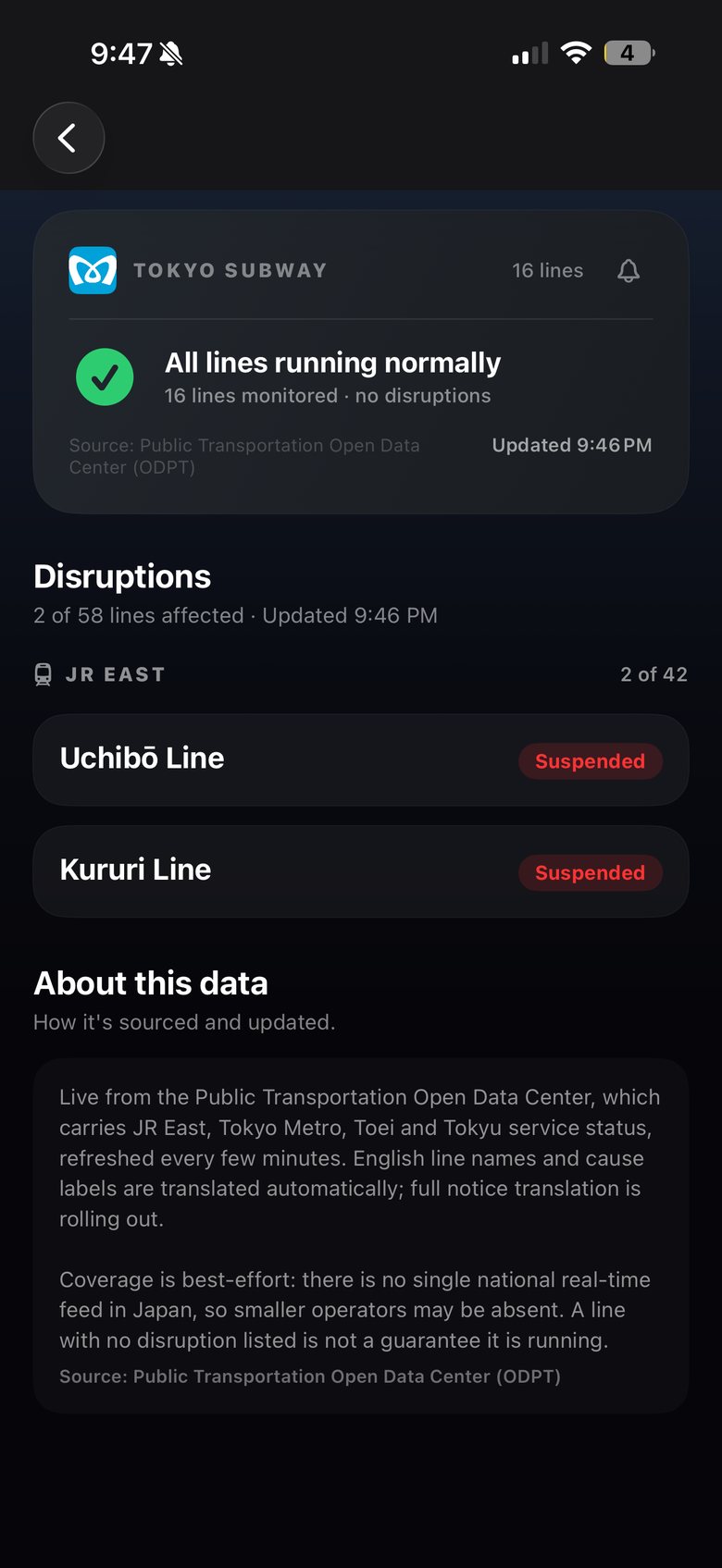
Japan has no single national real-time rail feed. SHINDO says exactly what it covers — and that no listed disruption isn't a promise a train is running.
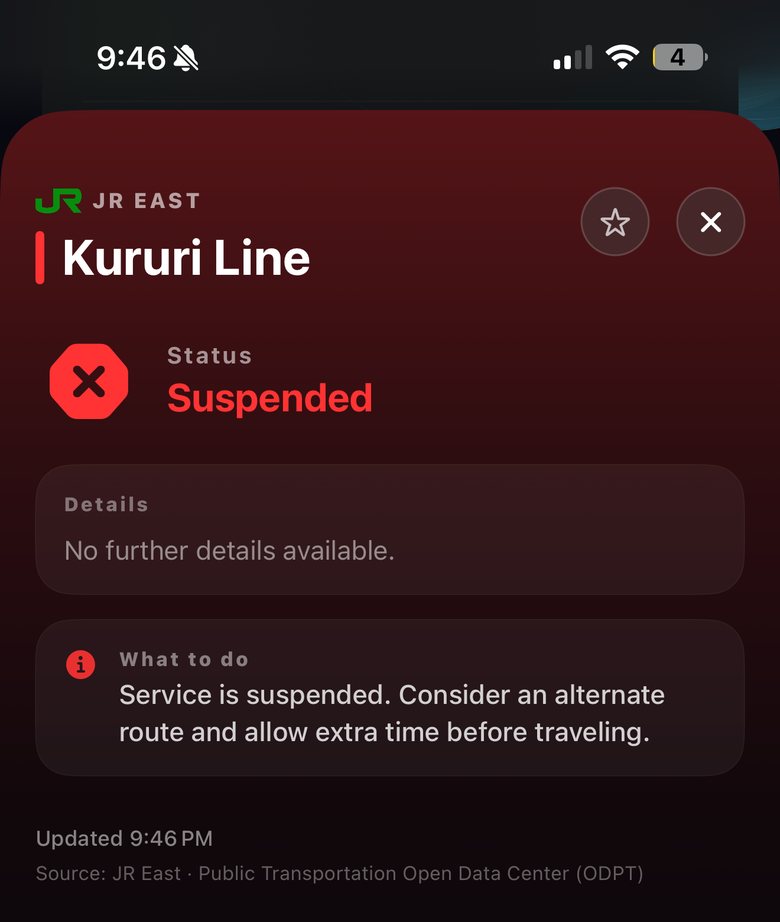
Star the Uchibō or Kururi line to see the alert you'd have received on the evening of 17 October.

Line status comes from JR East's public train information and from the Public Transportation Open Data Center (公共交通オープンデータセンター), used under its terms; the operators do not guarantee the data. SHINDO is not affiliated with or endorsed by East Japan Railway Company, Tokyo Metro or Toei. Line names and operator marks belong to their owners.
Screens show the SHINDO app at 21:46 on 17 October 2026. Coverage is best-effort: smaller operators may be absent, and a line with no disruption listed is not a guarantee it is running. Follow station announcements and staff instructions. All data sources.