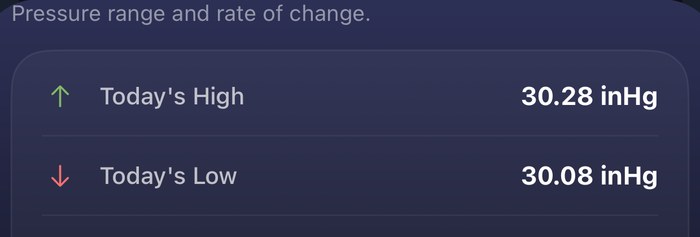
About ten tonnes of air press on every square metre of Japan. When a low or a typhoon moves in, that weight falls — and plenty of people notice it in their head before they see a cloud.
Move up and down the sky to change the weather.
You're not imagining it, and you're not alone. Japanese even has words for it: 気象病 (kishōbyō, “weather sickness”) and 天気痛 (tenkitsū, “weather pain”). Plenty of people here say their head knows rain is coming before the forecast does. Many people arriving from abroad have never heard of it — so the headaches that start in their first rainy season or their first typhoon get blamed on jet lag, stress or the new job.
Near sea level, air pressure falls by about 1 hPa for every 8 metres you climb. So a change in the weather can be measured in floors.
A lift does it in a minute and your ears pop. Weather does it over hours — too slowly to notice, but not too slowly for some bodies.
Japan's pressure has seasons, and each one has its own rhythm. Pick the month you arrived — or will — and see what your first twelve months bring.
Illustrative: how unsettled pressure tends to be in each season around Tokyo. Not measured data; timing varies by year and region.
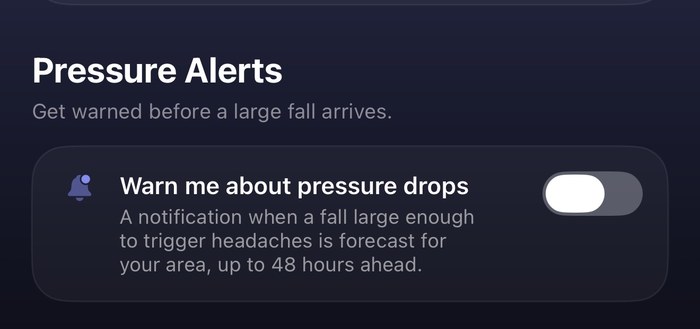
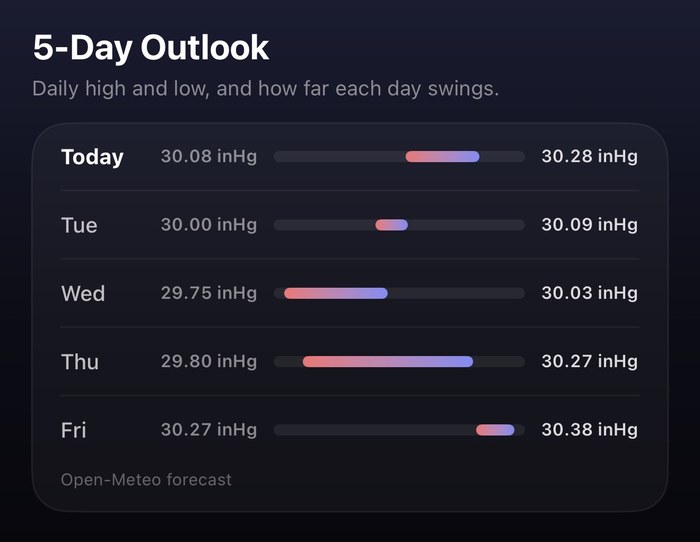
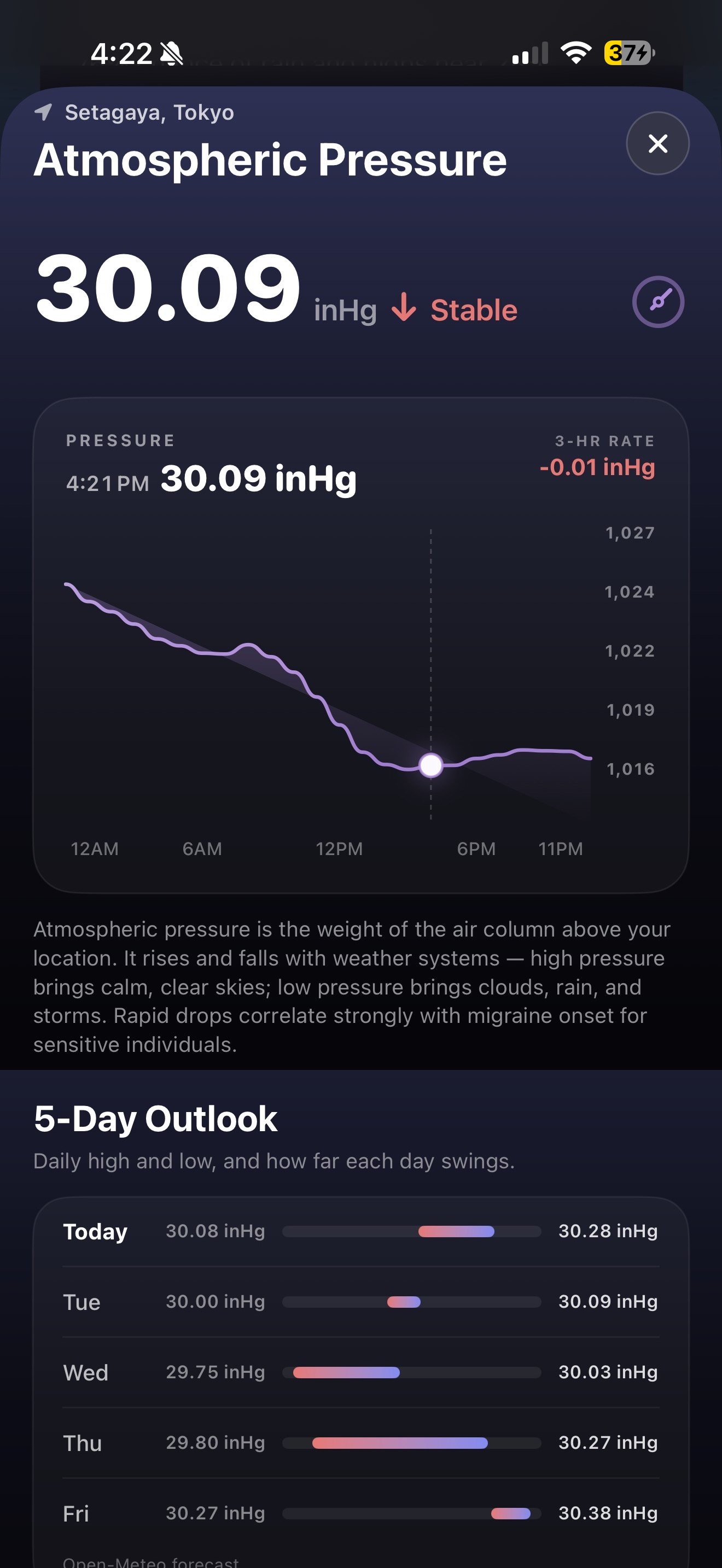
SHINDO charts the pressure where you are, shows five days ahead and explains the pattern in plain language. Turn on Pressure Alerts and it warns you when a large fall is forecast for your area, up to 48 hours ahead.


Japanese TV and the Japan Meteorological Agency use hectopascals (hPa). Apps set to US units show inches of mercury — like the SHINDO screens on this page. The oldest barometers measured it in millimetres of mercury. Drag the mercury to see how they line up.
Air pushes on the dish; the dish pushes mercury up the tube. 760 mm at the standard atmosphere.
Headache diaries are a standard tool: note each headache, and put the weather next to it. If yours follow falls in pressure, it usually shows within a month or two — and you'll have something useful to show a doctor.
SHINDO shows pressure information. It does not diagnose, predict or treat headaches or any other medical condition. If you have frequent, severe or unusual headaches, see a doctor.
Research mentioned: a 2015 study of 34 migraine patients in Japan (SpringerPlus) and a 2019 study in mice (PLoS ONE). The lowest observed pressure is from Japan Meteorological Agency records. Altitude equivalents use the international standard atmosphere.
Pressure forecasts in the app come from Open-Meteo. Screens show the SHINDO app on 19 October 2026; the sky, typhoon, year ring, forecast curve and diary on this page are illustrations.