3
GuestSetagaya · 2 min ago
Books fell. Elevator stopped.
Every pin is one person's report, rising where they felt it.
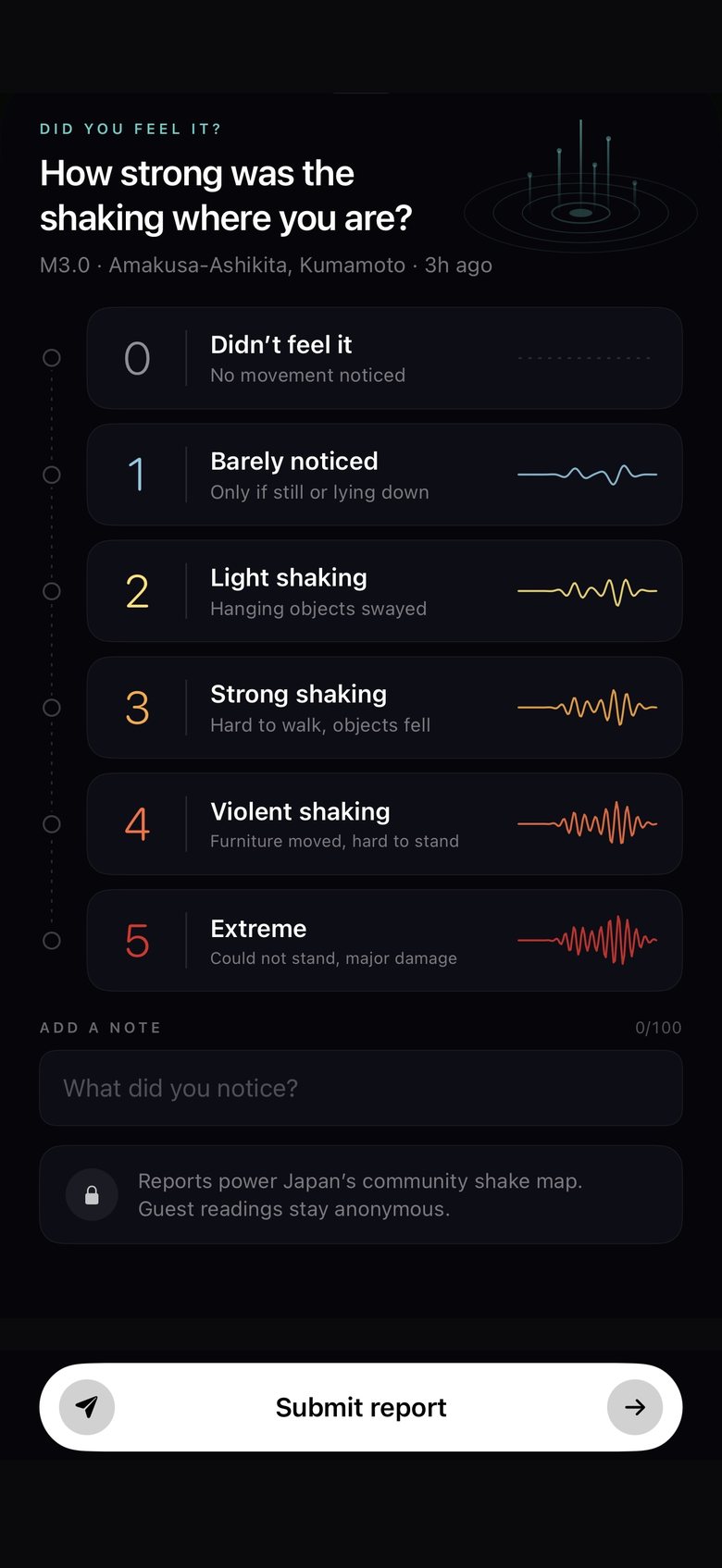
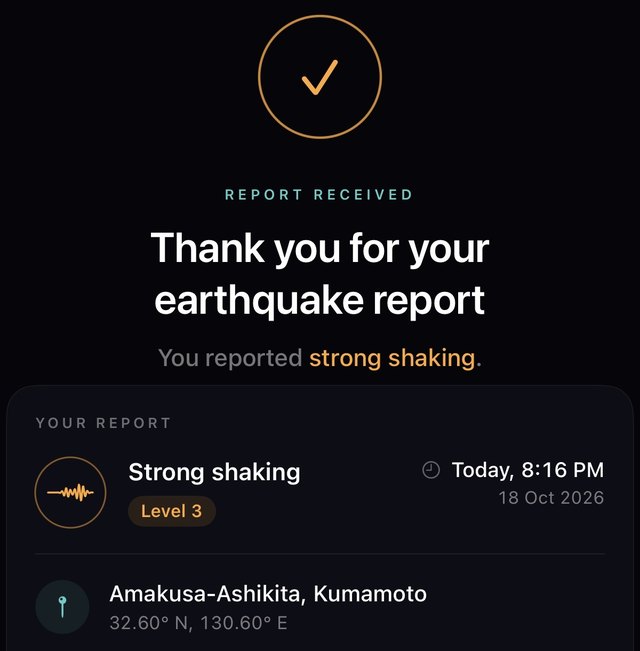
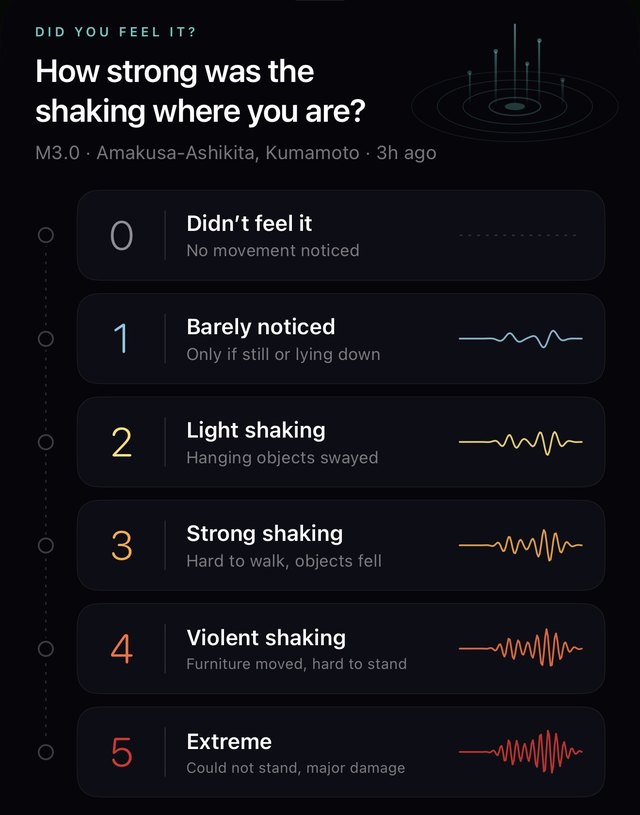
Instruments measure the ground. People know what it did to their room. After every earthquake SHINDO asks one question — how strong was it where you are? — and puts the answers on a live map, so the next person checking at 3 AM can see what their neighbours felt. Six steps anyone can judge, a short note if you want, and that's it. In English, Japanese or Spanish.
SHINDO's felt scale describes what you noticed. JMA's seismic intensity (震度) comes from instruments. SHINDO shows both, each labelled for what it is.
For each earthquake SHINDO counts what people felt, step by step, and shows it beside the epicentre — so you can see at a glance whether your neighbours barely noticed or grabbed the doorframe.
Illustration. Real counts appear in the app for every earthquake.
Books fell. Elevator stopped.
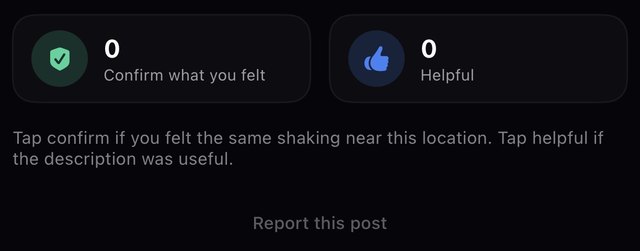
Example post — tap the buttons
Every post carries two buttons: Confirm, if you felt the same shaking near that place, and Helpful, if the note told you something useful. So one person's report is easy to weigh against what everyone else felt. And every post has Report, for anything that breaks the rules.
A report needs a place to be useful — but not your doorstep. SHINDO stores an approximate position, rounded to two decimal places of latitude and longitude, about a kilometre. Guest readings stay anonymous, and your name only appears if you post with an account.
Privacy policy
Community reports are what people say they felt; they are not official measurements. Earthquake information comes from the Japan Meteorological Agency via P2P地震情報. Always follow JMA, your municipality and emergency services.
Screens show the SHINDO app on 18 October 2026. Posts, counts and maps on this page are illustrations, not real reports. Community guidelines · Privacy.